について
Recustomerは、注文から購入後までの体験向上・顧客接点創造を実現する購入体験プラットフォームです。注文を追跡してお届け予定日を通知する「Recustomer 配送追跡」、返品・交換業務を自動化する「Recustomer 返品・交換」、注文キャンセルに対応する「Recustomer キャンセル」、商品を試したうえで購入を判断できる「Recustomer お試し購入」、発売前や再入荷の商品の需要を確保する「Recustomer 予約購入/再入荷確保」の5つのサービスを提供しています。特別な購入体験を提供することで、ユーザーの体験向上を実現し、EC事業者の売上向上を支援します。
■Recustomer株式会社 概要
会社名:Recustomer株式会社
代表取締役:柴田 康弘、辻野 翔大
事業内容:購入体験プラットフォーム「Recustomer」開発・運営
設立:2017年3月
所在地:東京都中央区銀座5丁目14−1 銀座クイント 8F
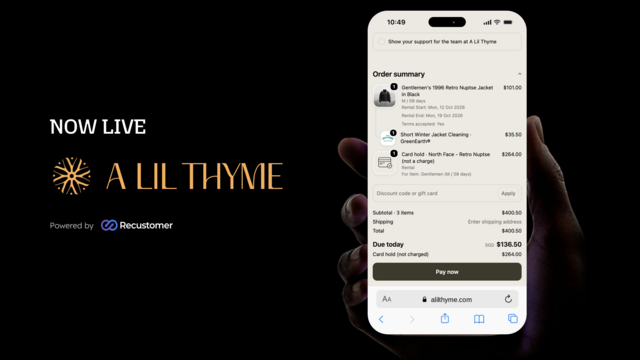
Recustomer Brings Try Before You Buy Technology to Winter Wear Rental with A Lil Thyme in Singapore
Protecting high-value rental inventory without taking a large security deposit upfront.
Singapore is warm year-round, which is why nobody there needs a winter coat. It's also why plenty of Singaporeans need one.
That gap is where
sits. The company rents designer winter coats, jackets and cold-weather accessories to travellers heading somewhere cold, and handles the operational side of the business end to end: getting the pieces to customers before their trip, facilitating their return afterwards, and professionally cleaning them between rentals.. For a family flying to Hokkaido for six days, buying four down jackets that will sit in a Singapore wardrobe for a decade makes little sense. Renting them does.
But renting creates a problem retail never has to solve. Once an item leaves the warehouse, it stays with the customer for weeks - and it may come back damaged, late, or not at all. A Lil Thyme’s rental terms were always clear about this, setting out the customer’s responsibility for the pieces while they are in their care and the applicable charges should something go wrong. Having those charges set out in the terms, though, is not the same as being able to collect it.
So A Lil Thyme faced the same trade-off familiar to many rental businesses: how do you protect high-value inventory without asking customers to pay a large security deposit upfront?
The terms could establish what a customer was responsible for, but the payment infrastructure still needed to support it. As the business grew, A Lil Thyme needed a way to secure that amount without turning inventory protection into a less convenient rental experience for the customer.
The problem was never the money. It was the hold.
The obvious fix - charge a large security deposit upfront and refund it later - fixes the operator's problem by handing it to the customer. However, nobody wants a few hundred dollars charged upfront and returned after a holiday. The less obvious fix is one Recustomer, the Tokyo-based purchase experience platform, had already built for an entirely different reason.
The partnership also marks an international milestone for Recustomer, with A Lil Thyme becoming one of Recustomer’s pioneer overseas customers to go live with Try Before You Buy solution.
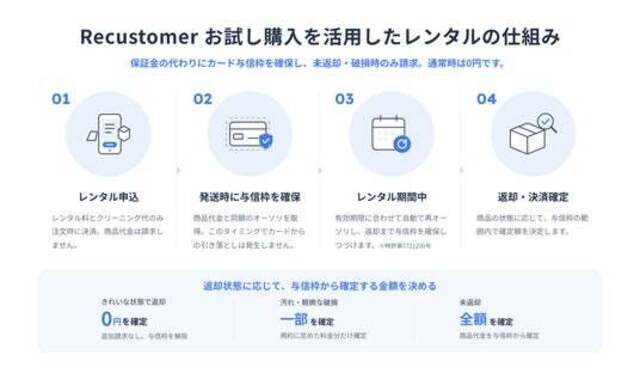
Recustomer's Try Before You Buy service was designed for online retail: let shoppers receive items first, decide second, and pay only for what they keep. The customer-facing promise is about trying things on. The engineering underneath is about something narrower and harder - placing an authorization hold on a credit card instead of a charge, and keeping that hold alive.
Card authorizations expire. That single fact is why "just put a hold on it" has never been a real answer for rental businesses, where the item is out for weeks. Recustomer holds a Japanese patent (No. 7721200) for automatic re-authorization processing: the system renews the authorization on its own, maintaining the hold across a period far longer than any single authorization would survive.
The mechanism doesn't care what the hold is for. That turns out to be the interesting part.
One piece of technology, several jobs
At A Lil Thyme, the same engine that lets a shopper try on three dresses now secures an amount against a rental. Nothing is charged if the pieces are safely returned in accordance with A Lil Thyme’s Rental Terms. The card hold is simply released. Where a charge is applicable under the Rental Terms, it can be made within the amount already secured.
Most of the integration was a fit, not a build. The authorization hold could be aligned with the charges already set out in A Lil Thyme’s Rental Terms. The coverage sits on top of the existing store: existing payments continue to be processed as usual, and the checkout flow customers see remains unchanged. Rather than placing the hold when the order is made, Recustomer places it closer to fulfilment, before the pieces are delivered to the customer. This means someone booking months ahead doesn’t have a hold placed on their card unnecessarily early.
That last choice is a good tell about the design philosophy at work. The technically simplest moment to place a hold is at checkout. The right moment for the customer is later.
What the operator actually gets back
The outcome is a rental process that protects the business without unnecessarily burdening the customer.
For A Lil Thyme, securing high-value inventory is necessary, but it shouldn’t come at the expense of the rental experience. Moving that protection into the payment infrastructure means it can work consistently as the business grows, without asking customers to fund a large deposit upfront.
For a founder-led business, that means less operational complexity around securing each rental, and more attention available for the things that actually grow the business: the wardrobe, the experience, and helping more travellers find the right outerwear for their trips.
For Recustomer, A Lil Thyme is also proof that the authorization engine reaches further than the service name suggests. What began as a way to let retail shoppers try before they buy is, underneath, a general-purpose mechanism for securing an amount without taking it. Rental operators, subscription businesses, and anyone else who ships something valuable and expects it back are all standing on the same problem - and Recustomer says the setup can be customized and onboarded for those operators much the way it was for A Lil Thyme.
Somewhere over the Sea of Japan this winter, a family from Singapore will be wearing coats they don't own, secured by money that was never taken. That's what good payments infrastructure looks like: nobody involved has to think about it.